Fishing in inclement and harsh weather can be productive and rewarding time on the water. Scratch that. Fishing in inclement and harsh weather can be productive and rewarding time on the water when you have the right equipment. Fishing in cold and/or wet weather requires a quality jacket to protect the portions of your body that aren’t covered by waders.
Winter fishing on the Dream Stream in the Sonic Pro Jacket
Redington’s Sonic Pro Jacket is one such jacket. Constructed of 100%, 4-layer waterproof and breathable fabric, the Sonic Pro Jacket features the ultrasonic welded seam construction that is found in Redington’s extremely durable Sonic Pro Waders. The Sonic Pro Jacket boasts seven pockets, including: four spacious zippered, chest pockets, one internal zippered chest pocket, an open internal chest pocket, and a huge double zippered back pocket. Additionally, there are fleece-lined handwarmer pockets inset behind the external chest pockets. The Sonic Pro Jacket also features a waterproof centerfront zipper and an oversized fully adjustable hood that rolls up and tucks into the collar. Finally, perhaps my favorite feature are adjustable cuffs, that when properly fitted, provide a water-resistant seal for your arms.
A look at the front waterproof zipper of the Sonic Pro Jacket
Since I live in Colorado, I don’t experience too many all out rainy days (until recently). However, Colorado is the land of tailwaters and has a plethora of winter fishing available. Winter fishing conditions in Colorado can often times be described as inclement. As such, over the past 10 months, it is my opinion that the Redington Sonic Pro Jacket has been put through it’s paces. After nearly a year of use, I have nothing but positive things to say about the jacket and would definitely recommend it to anyone in search of a high quality, durable wading jacket for the upcoming fall, winter and spring angling seasons. Additionally, at $299.95, the Sonic Pro Jacket is, at minimum, 100 dollars cheaper than direct competitors similar offerings. Yet another quality product from Redington at an affordable price. It’s seemingly what they do.
Bosley gets a good sniff in.
Read on for my detailed take on the Redington Sonic Pro Jacket.
PERFORMANCE
A jacket is either waterproof or it isn’t. The Sonic Pro Jacket is waterproof. Denver receives 300 days of sun a year, so in a typical year, there aren’t a great deal of opportunities to test a wading jacket in the rain. However, when the opportunity has been presented the Sonic Pro Jacket has stood up to the challenge. Perhaps my favorite feature in the jacket are the adjustable cuffs, that when properly fitted, provide a water-resistant seal for your arms.
Sonic Pro Jacket experiences some -14 F temperatures.
In the winter, when water temperatures hover at or slightly above freezing and ambient air temperatures can sink below zero, keeping cold water off insulating layers is of the upmost importance. When fitted properly, the adjustable cuffs create an excellent seal that keeps the insulating layers dry and allows for a more comfortable day on the water.
A look at the adjustable cuff of the Redington Sonic Pro Jacket
In addition to utilizing this jacket during days on the water, I have also used it as a rain jacket during the historic rains of early September here in Colorado. My girlfriend and I sat in torrential rains from 5 PM to 12 AM for a concert at Red Rocks. The only complaint I have is that I didn’t pair the Sonic Pro Jacket with my Sonic Pro waders. Had I done so, my lower half would have been dry as well.
Storage & Fit
As detailed in the second paragraph of this review, the Sonic Pro Jacket features seven spacious pockets. During my days on the water with this jacket, I primarily made use of the four zippered, chest pockets. All four pockets are spacious enough to hold a large 8-row C&F Design fly box. With all of the available storage in the Sonic Pro Jacket, you can replace a chest, hip, or sling pack if you so desire.
Sonic Pro Jacket storage
The fleece-lined handwarmer pockets that are inset behind the external chest pockets are serviceable. One of my only gripes with the design of this jacket is the thickness of the fleece lining. It is a little on the thin side and leaves a something to be desired when the hands need a warm home during a cold winter day.
In addition to the plethora of storage, the Sonic Pro Jacket boasts an oversized and fully adjustable hood. On it’s own without adjustment, the hood is big and unwieldy. However, with a quick adjustment, the hood fits perfectly around a fitted hat and/or knit hat and allows for the comfortable, continued pursuit of our finned friends.
The Sonic Pro Jacket has a relaxed fit. I am 6’2” and 215 pounds. The Sonic Pro Jacket in Extra Large was the appropriate size for my frame. It has ample space for layering options depending on the temperature. In addition to allowing for the user to wear the appropriate layers, the large rear storage pocket serves as the perfect storage space for those additional layers as the day progresses. I found the Sonic Pro jacket to be comfortable when casting, walking, and stalking trout.
DURABILITY
It has been expressed to me by those who I fish with, that I am abnormally hard on my gear. With that in mind, the Sonic Pro Jacket has stood up to all my apparently abnormally hard tests. The zippers, the seams, the stitching, the pull strings are all intact and performing just as well as they did when I pulled the jacket out of the box 10 months ago.
TAKEHOME
I feel like every review of Redington gear I publish ends in a similar fashion. But, rightfully so, I suppose. Durable, well-designed, and more affordable than it’s direct competitors, the Sonic Pro Jacket is worthy of such high praise. With fall upon us and winter knocking on the door, the Sonic Pro Jacket is an excellent piece of apparel to make those foul weather days more enjoyable. The more comfortable you are when fishing in the cold, the more fish you’ll catch. It’s math...and science.
For those of you plugged into the fly fishing blogosphere, you have probably read, seen, or heard about Redington's new Vapen rod series (here, here, here, here, here, or here). You might have read that the Vapen Red recently won the Best Fly Rod award at the EFFTEX show. You may have already formed your opinion about it's less than traditional grip. Maybe you're completely Vapen-ed out.
The 9 foot 8 weight variety of the Redington Vapen Red. It weighs 4.1 oz.
The Vapen rod series is composed of the Vapen (which has a traditional cork grip) and the Vapen Red (which has the much publicized PowerGrip.) Both the Vapen and the Vapen Red feature Redington's X-Wrap Blank Technology.
According to Redington, "the X-Wrap construction method involves wrapping one layer of super-high density carbon ribbon inside the blank and another counter-wrapped on the exterior surface. X-Wrap construction provides surprising power with little effort."
The Vapen Red bends well.
With the Vapen Red, anglers have the choice to pair the X-Wrap Blank Technology with the PowerGrip handle. According to Redington, the PowerGrip was created as a collaboration "with renowned golf club grip company, Winn Grips. Together they developed an advanced polymer grip that won't slip when wet, feels soft in the hand and reduces fatigue."
The Vapen rod series will be available in August 2013 and Redington is offering both the Vapen and Vapen Red in three through twelve weights.
Redington provided me with the opportunity to test an 9 foot 8 weight Vapen Red. Recently (and by recently, I mean the last three months), I have been focusing my angling efforts on carp. Fly fishing for carp requires several skills including the ability to present a fly extremely accurately and deftly, the ability to detect and capitalize on subtle takes, and the ability to withstand impressive and powerful runs.
In many ways, fly fishing for carp provides an excellent opportunity to fully test the capabilities of a rod. So, instead of blindly tossing streamers for toothy critters or big browns, I decided to take this red-gripped wonder onto the freshwater flats and let some of Colorado's finest golden ghosts do their best.
If you don't like reading, I'll save you some pain. In short, I like this rod, a lot. The more I use it, the more I like it.
If you like reading, please...read on.
The Rod Performance
While the PowerGrip has seemingly drawn the most attention to the Vapen Red, I would like to discuss the performance of the rod itself first. Why? Because it is impressive. I find myself planning fishing outings around using the Vapen Red. Bottom line: It can shoot a lot of line (accurately) and handles shorter (more fishy) casts well. It does it's job. Very well.
The Vapen Red corralled my first mirror carp.
For the purposes of the review, I paired the 9 foot 8 weight Vapen Red with a Redington Delta 7/8 Reel and Rio Grand 7 Weight line. The rod is surprisingly light in hand, but also has a great deal of backbone. That is to say, you don't feel as though you might break the rod when your casting it. Sometimes, I get that feeling with lighter rods.
As a general rule, I prefer a medium action or mid-flex rod. I have found that some fast-action rods feel like broomsticks when casting or fighting fish. I don't like that feeling. The Vapen Red is fast, but it is not a broomstick. That's a good thing.
Redington's David Visnack said "You don't cast this rod, you fire it." I am not one for cheesy marketing jargon. In fact, sometimes I find it to be somewhat off-putting. However, Visnack's statement is spot on. During one of my many days on the carp flats with this rod, I had threw several tight-looped and accurate 60-70 foot casts with one false cast.
The Vapen Red presented this dry fly delicately enough to
fool a finicky carp on the surface.
But, it was obvious the rod could do more. When the carp flats were deserted, I looked to test Visnack's statement as much as my somewhat inconsistent casting stroke could. With an entire fly line at my feet, I threw two false casts and fired. All 90 feet of the Rio Grand fired past me and unfurled perfectly. The Vapen Red's guides were left hugging neon yellow backing. The loop didn't collapse. The leader didn't bunch up on itself or throw the fly off to a side. Everything worked as it should. My jaw dropped. I couldn't believe how accurately I just casted 90 feet of line. I did it again. The rod performed consistently. I did it two more times, just to make sure it wasn't dumb luck.
Now, a fair point can be raised. When will I need to cast 90 feet of line when fishing? Probably never. But, it's nice to have in the toolbox. Additionally, the power displayed when casting an entire line has it's advantages on the freshwater flats. The rod could pick up 40 to 50 feet of fly line extremely efficiently, which allowed me to quickly re-target a fish that may have changed directions after I attempted to present a fly.
So how did it fish?
In the situations I encountered on the flats, shots at cruising or mudding fish were typically between 15 and 45 feet away. After my first experience with the Vapen Red, I was of the opinion that the rod generated impressive line speeds, was very accurate on casts from 30 to 70 feet in length, and struggled with some of the shorter casts that were required. However, with a little bit of time, I adjusted my casting stroke and the Vapen Red performed very well in close quarters.
I am prone to throwing tailing loops, especially on longer casts. When casting the Vapen Red, the loop stability was very impressive. I rarely threw a tailing loop and most of the loops were particularly compact, which allowed for very accurate presentations. Additionally, the rod seemed to dampen vibration while casting, which allowed the casts to shoot straighter. There is nothing worse than a rod vibrating side-to-side as line shoots through it's guides. Maybe there are worse things. But, the result is a less accurate and efficient cast. That can be frustrating.
15 second @redingtongear Vapen Red carp test. #carp #carpamateur #carponthefly #redingtongear #video #onthedry #flyfishing #colorado by @yukongoesfishing
The Grip:
The grip obviously stood out when I first laid eyes on the rod. But, like Moms worldwide always say "Don't judge a book by it's cover." Good or bad. I didn't want to rush to judgement on either side. Playing tennis in high school, I am familiar with similarly textured grips. So, while it was certainly a different feel for a fly rod, the grip wasn't all together unfamiliar.
A YGF personal best Common. Vapen Red.
During my first day on the water with the Vapen Red, there was a noticeable difference in how the grip felt in hand. Obviously. Did I like it more than cork? No. Did I like it less than cork? No. I was undecided. At times with a wet hand, the grip seemed to feel slippery. But, with time, the grip has become more and more comfortable and performs quite well when damp or downright wet. Ultimately, it will come down to angler preference. However, I would recommend the grip to others. It is my opinion that it provided more feel when casting and fighting fish.
The TAKEHOME
Redington hit their mark with the Vapen Red. The Vapen Red passed the Colorado carp test with flying colors and has earned the much heralded imaginary YGF seal of approval. A rod that displays this level of accuracy and power, as well as versatility is hard to find. One in the $300 range is that much harder. The Vapen (the cork grip) will retail for $299.95, while the Vapen Red (with the PowerGrip) will retail for $349.95. A deal at both price points, give the Vapen or Vapen Red a serious look if you are in the market for a new fly rod, regardless of your chosen quarry.
This carp required a short, delicate, and precise presentation as it cruised directly towards me. The Vapen Red performed very well.
Fly lines are vital piece of equipment. They are, after all, the weight that casts our flies to the fish that may or may not want to eat our “organized” piles of feathers and fur. I have fished with the Rio Gold fly line for the past 3.5 years. For those keen followers of YGF, you might have already thought to yourself, “Hey, wait a second BWO, you have been seriously fly fishing for 3.5 years.” So, I have. I will readily admit that the first two years, I couldn’t tell the difference between good and bad fly line. I am still somewhat of a beginner. But, now...now I can tell the difference.
"Gold and Gold, Gold and Gold" - A silverless Yukon Cornelius
The Rio Gold fly line is a great general purpose fly line. In early spring, Rio provided me with a WF5F (weight forward - 5 weight - floating) line. I have fished it all season. This year, I used the line on a variety of rods (most of which are not my own) including the Redington Pursuit (9ft 5 wt), Sage One (9ft 5wt), Orvis Helios (9ft 5wt), and Hardy Sintrix Zenith (9ft 5wt). All of these rods are fast action fly rods. I have been able to comfortably throw and present small dries to rising trout, then turn around and throw big foam, streamers, or double nymph rigs. August in Montana is really the time when the RIO Gold demonstrates it’s versatility. Fishing tiny trico spinners in the morning, hopper-dropper rigs in the middle of the day, and streamers in the evening, the Rio Gold comfortably handles a variety of fishing situations. Pairing the Rio Gold with Rio's new Powerflex tapered leaders, I was comfortably and accurately fishing a variety of flies in a variety of situations.
Rio's new Powerflex Leaders
Features
The Rio Gold WF5F line is 90 feet in length with a head measuring 47 feet. Simple math tells you that the running line is 43 feet in length. The front taper is 5’6” long, which is considered to be a mid-length front taper. The Rio Gold comes in two color combinations: Moss/Gold and Melon/Gray Dun. I chose the Moss/Gold color combination. With this color combination, the head is Moss green and the running line is Gold. Similarly with the Melon/Gray Dun combination, the head is Melon and the running line is Gray dun.
The Rio Gold Lines line
Rio Gold Taper
The iteration of the Rio Gold fly line that I tested had the following features: XS Technology, Agent X Technology, SFT Technology, Dual Tone, Front-End Welded Loop, and Back-End Welded Loop. The newer version of the Rio Gold fly line has Rio’s new MaxCast and MaxFloat tip technologies. Rio offers the Gold fly line in six sizes (from WF3F up to WF8F).
The front-end and back-end welded loops make changing leaders and/or reels/spools a breeze. For trout fishing, the welded loops have performed well and held up to the rigors of Montana’s waters.
Performance
As I stated above, the Rio Gold is a great general purpose fly line. It more than handles small to large dry flies, double nymph rigs, and streamers. It performs well with casts from 15 feet to 70 feet. Who knows beyond 70 feet? Can you remember the last time you presented a fly to a trout more than 70 feet away? I can’t. It holds a stable loop if you can throw a nice loop.
But, as with all great general purpose products, it is great at doing everything well...not great. Diehard nymph, dry fly, and streamer fisherman that will spend the whole day fishing one discipline should look towards other, more specialized fly lines. But, for those of us that fish to the ever changing conditions a typical day on the water presents, the Rio Gold is an excellent choice.
I am an avid streamer fisherman. There have been times when throwing some larger streamers, I have experienced the dreaded big fly snap back that can send your streamer off target. That should be expected. It does not have the aggressive front taper of the Rio Coldwater Clouser, Rio Indicator, or Rio Grand lines.
This line is billed to have a taper that allows a rod to load at close range. Found this too be true, especially with moderate to large dry flies, nymph rigs and streamers, however, with a fast action rod, sometimes the rod wouldn’t load completely when casting shorter distances between 15 and 20 feet.
Durability
One can expect 200 to 300 hours of actual use with a modern fly line. If I do some quick, back of the envelope calculations, I fish, at minimum, one time a week (no matter the time of year). That’s at least 52 days on the water a year. During the summer, spring and fall, I will often fish 2 to 4 times a week (two full days and one or two partial days). Each season is 13 weeks. Assuming that I fish once a week during the winter (13 water days) and between 2 and 3 days a week (78 to 117 days) during the remaining seasons, I probably fish between 91 and 130 days a year (SIDE NOTE to parents and loved ones: I’m sorry, and also, I’m not...but, I also am...in addition i wish that was figure was more like 200 to 300 times a year...so......). Assuming an average of a 6 hour outing (accounting for partial days and shorter winter days) with about 3 hours of actual use of the fly line, I spend approximately 273 to 390 hours of my year actually using fly line. So, a fly line should last me a little less than a year.
It should also be mentioned that I have terrible fly line management. Always stepping on it. Tangling it. So, the lifetime of the average line is mostly likely reduced when I use it. Also, I am poor. I try to get as much use out of my fly lines as possible. In the past, towards the end of the season (after 80 plus days on the water) the welded loop has started to fall apart at times. Additionally, the head of the line starts to sink at the end of the season. But, that is after more than 300 hours of use. During the first 300 hours (or so) of use, the line performs admirably.
Color Options
As I mentioned above, the Rio Gold comes in two color combinations: Moss/Gold and Melon/Gray Dun. I chose the Moss/Gold color combination. In the Melon/Gray Dun combination, the head is Melon and the running line is Gray dun.- casting competition lines - orange and white. wish is was white and orange. According to credible sources - white fly line would be the most stealthy of floating lines. There is a reason, a trout’s belly tends to be white or light. I wish that option was available.
The Take-away
Over the past 4 years, I have owned three five weight Rio Gold lines. I have beat them to death and they perform...very well. For someone who fishes as often as I do, this should serve as an indication of my satisfaction and the durability of the Rio Gold line.
DISCLAIMER: The Rio Gold WF5F Line tested in this product review were provided to me at no cost, but hold a retail value of $74.95. I currently hold no association with Rio whatsoever. As with this review and all future reviews, I will do my best to offer up my honest and unbiased opinion, good or bad.
The Greenfish CPR Mount was designed for use on a boat or kayak. The mount itself is comprised of a camera/video camera connection, a removable flex arm, a no-slip foam grip, an expansion locking system, and an additional mount connection. The expansion locking system was designed for locking the mount into most tubestyle rod holders and the additional mount connection is intended for easy use with a Scotty flush mount. I don't own a boat or kayak. Greenfish put together a nice video giving an overview of how the CPR Mount was designed to be used.
I don't own a boat or a kayak. Why do I want to use the CPR mount for my GoPro "video-ing?" There is no short answer. But, I saw the potential for adding a new element to shooting with the GoPro. The mount is sturdy, well constructed, and has several unique alignments that can produce improved and interesting angles for the handheld/wading GoPro user.
I have used the CPR Mount in the following ways. (Please excuse the faces - the same issue that plagues my hero shots apparently plagues my professional hand modeling - mean mugging and gaping moufs (that's mouths with an f))
As a pseudo steadycam.
The CPR Mount has some weight to it. It isn't overly heavy, but with enough weight towards to the bottom end of the mount, it serves as a reasonable steadycam for handheld cameras like the GoPro. Footage taken while walking behind a subject are noticeably steadier when the GoPro is attached to the top of the mount.
Panning shots - they are smoother
"Zooms" in and out. Push up style. Don't mind the stare down.
Did I mention smoother panning shots? Oh, I did. Well, it is worth mentioning.
A great deal of what the CPR Mount adds to the use of my GoPro is stability. The panning shots are smoother than handheld shots. Unlike the PVC pipe that I had previously been utilizing, there is no bend or give in the frame of the CPR Mount. That allows for steady pans and less shaky footage. The two hand "zoom"/push up alignment allows for arms length zooms to be made, adding another dynamic layer to the sometimes predictable set of GoPro shots.
High angles, you will be mine
Fully extended with the removable flex arm, the CPR Mount extends about 4 feet. Add some long arms, I can now get some high angle shots that were once just a bit of a pipe dream. Casting and catching shots will never be the same for YGF as long as I aim it right.
Cons:
The CPR Mount was designed to be used with tubestyle rod holders and/or flush mounts. Beyond the no-slip foam grip, the grip on the mount weren't designed for hand held use. Although, one can comfortably use the mount while holding it around the expansion locking system or additional mount connection.
Look for a some nice shots using the CPR Mount in the upcoming YGF video (video coming out next Monday or Tuesday).
My CPR Mount is making the rounds. Ryan Thompson of Swift Current Productions and Glacier Anglers used it in portions ofhis video "Lights Out" for the Simms Ice Out Shoot Out. Connor Scott of Glacier Anglers will be taking it on his trip to the Smith River and promised to share his thoughts on the CPR Mount when he returns next week.
The Greenfish CPR Mount retails for $95.99. With the purchase of a CPR Mount, Greenfish gives $4.00 to the charity of your choice (choose between Bonefish and Tarpon Trust, Fish America, Pier Institute, and Recycled Fish). I received the Greenfish CPR Mount from the friendly and knowledgeable guys at Headhunters Fly Shop. In addition to the Greenfish CPR Mount, Headhunters carries GoPro cameras and the associated GoPro accessories and mounts in their fly shop (off to the right hand side when you enter the shop) and in their online store. They also are a great source of information when it comes to putting together your next GoPro video. Seriously, email John (scumliner). He'll answer your questions.
It is often said that a good pair of polarized sunglasses are a fisherman's most important piece of equipment. With good reason, most of us can't smell or hear fish under a couple feet of water. Without a good pair of polarized sunglasses, those feeding trout are hidden from the prospecting fly fisherman.
For the last couple years, I wore a schmedium-sized, substandard quality pair of polarized sunglasses. It showed. On more than one occasion (read an uncountable number of occasions), Bucko would start talking about fish stacked up in a run or riffle. I would stare at the water, through the water, to the water and saw nothing. Meanwhile, Bucko was catching and landing the beasts from what I thought was the mysterious deep.
In the beginning of the year, I received a pair of polarized glass lens sunglasses. It changed my perspective, I could see holding fish everywhere I went. The underwater world opened up to me.
The Revo Bearings come in three different lens tints: graphite, bronze, and water. I chose to test and review the Water Lenses. The Water Lenses allow 10% of light to transmit through the lenses as compared to the 13% light transmission associated with the graphite and bronze lenses. According to Revo, "the Water Lenses cut back blues, and allows greens and reds to come through in environments with abnormal amounts of blue making it great for ocean and deep water wear."
Test Conditions - Range of weather and water conditions that the Revo Bearings under which were tested.
In order to fully test the Revo Bearing sunglasses, I begrudgingly fished in a variety of light conditions from early February through mid-March. From cloudy and snowy to sunny with a little bit of partly cloudy weather mixed in, I fished in everything. With a couple warm and rainy days, I even got the chance to fish in some slightly off-color water on the Bitterroot.
To me, there are three things that are most important with regards to a pair of polarized sunglasses for outdoor activities, especially fly fishing: 1) the quality of the optics 2) fit and comfort and 3) durability. Here are my impressions of the Revo Bearing sunglasses after more than a month on the water and around town.
Quality of Optics
The Revo Water Lens is a blue-grey lens with a blue mirror coating. Mirror coating deflects some of the light that hits the lens as a result, some light is not transmitted through the lens. Combining the mirror coating with the 10% light transmission of the blue-grey lenses, the Water Lens should theoretically be excellent bright light condition lenses.
Blue-grey lenses with a blue mirror coating
During this first month and a half with the Bearings, the lenses lived up to the expected bright light condition performance. These glasses really "shined" during blue bird days on the water. That was too be expected. I was very surprised with the glasses performance on partly cloudy and cloudy days. I expected my polarized, copper-tinted glass lens sunglasses to outperform the Water Lenses during these lower light conditions. They didn't. In many cases, I found the Revo Water Lenses to be more effective in comparison to the glass lens polarized sunglasses during these partly cloudy and cloudy conditions.
Fit and Comfort
I have a medium-large to large sized face, depending on the brand. The Revo Bearing frames are considered mid-sized frames. They fit my face extremely well. You know how some t-shirts fit better than others? If the Revo Bearing glasses were a t-shirt, it would be my favorite, best fitting, and most comfortable t-shirt. I experienced no issues with pinching, fatigue, or the dreaded facial imprinting. The spring hinges allow the glasses to hug your face in a gentle, yet firm manner.
The glasses don't feel heavy on the face. In fact, I barely notice that they are on while fishing, driving my the car, walking around town, and applying for real life jobs.
Durability
With the spring hinges, polycarbonate lenses, and nylon frames, the glasses feel sturdy. I have yet to drop them (and I don't plan on doing so in the near or distant future), but I have a great deal of confidence in these glasses ability to hold up to a little abuse. The nylon frames are flexible, but not too flexible. They maintain their designed form, while allowing for a little give here and there.
As an aside, the spring hinges are ingenious. It is the little things that add up to something extraordinary. With the spring hinge, there is an element added durability and flexibility that I have yet to encounter in sunglasses at a variety of price points.
The aforementioned ingenious hinges hinging
Look
I think the glasses are really, really, really, ridiculously good looking.I am not much of a "fashionista" (fashonistas out there, is that the correct usage of the term "fashonista?"), but I like the look of these glasses a great deal. They have replaced my previous everyday sunglasses....as my everyday sunglasses.
really, really, really, ridiculously good looking? yup.
After a month and a half on the water, in the car, at work, at the flyshop, and at school, I have been very impressed and pleased with the Revo Bearing sunglasses. With an excellent set of polarized lens and a flexible and durable frame, I think the $189.00 price tag is very fair. They aren't the cheapest sunglasses by any means, but it matches up well with competing brands by price. I would recommend these glasses to an angler looking for a high quality pair of polarized sunglasses. Imaginary YGF seal of approval has been stamped on these Revos.
Do you want to see the sunglasses on the water? Check out my most recent video, The Leprechaun and the Yeti.
Here are some stills of the sunglasses. Thanks to Anthony from False Casts and Flat Tires for the images of the glasses in action.
From the side.
What I see right before I put them on.
Oh yeah, it comes with a protective case and a cloth. As any real pair of sunglasses should.
See? Uh huh.
DISCLAIMER: The Revo Bearing sunglasses tested in this product review were provided to me at no cost, but hold a retail value of $189.00. I currently hold no association with Revo whatsoever. As with this review and all future reviews, I will do my best to offer up my honest and unbiased opinion, good or bad.
As some of you may know, I have had some issues in the past with leaky waders. I can be tough on waders. The only things I shy away when wading or walking the banks is barbed wire, knives, AK-47s, and Revolutionary era cannons.
In the past, I have been rewarded for my aggressive wading and “pre-wading?” with leaks. Massive leaks. Massive leaks around the seams connecting the stocking foot and the waders...and the seams around the knees...and the seams on the inside of my legs. Those leaks lead to a great deal of discomfort while fishing in the cold Montana winters. Massive leaks leave your feet in a neoprene fish bowl of sorts and shorten your winter, fall, and early spring days on the water. Plus, there is that pesky hypothermia hanging aboot. Conclusion: Leaky waders are the worst...the living worst.
Recently, Redington offered me the opportunity to test out a pair of their Sonic-Pro waders. Considering my recent history with waders, I jumped at the chance to review their critically acclaimed waders.
The Sonic Pro waders come in three different styles: the Sonic-Pro Zip Fronts, the Sonic-Pro Stocking Foot, and the Sonic-Pro Wader Pants. I chose the Sonic-Pro Stocking Foot waders. After having the Sonic-Pros in my possession for about a month, here is my review.
This could go really quickly. Do they keep me dry? Yes. Are they comfortable? Yes. Do they have plentiful amounts of dry storage? Yes. Would I recommend them to someone looking for new waders? Yes. End of review. If I ended it now, the review would be short on valuable details and opinions. So, prepare for the opining and provision of facts.
Facts:
The Sonic-Pro Stocking Foot waders are constructed of 100% nylon DWR coated wader fabric. 5-layer fabric on the lower leg and seat for durability and 3-layer fabric on the remaining portion of the wader. The seams are welded with sound (using Ultra Sonic welded construction) and have been double taped for added durability. The stocking feet are made of high-density neoprene. The waders have a zippered, brushed micro-fleece hand warming pocket and a laser cut exterior pocket with a YKK water resistant zipper. Additional storage is provided by a flip-out interior welded storage pocket with a mesh pocket, hemostat holder, and hypalon dock. A 2-inch stretch wading belt is secured by three belt loops. (and finally) The waders have gravel guards with a plastic anti-fouling lace hook.
Opinions and Thoughts: Construction
The three-layer/five-layer waterproof construction is pretty standard in comparable waders in other brands. However, the seams of those comparable waders use needle and thread, not sound to secure the seams. The use of the ultra-sonic welding technology reduces the weight of waders and theoretically the durability.
The waders feel sturdy and heavy duty, but aren’t heavy in weight by any means. From personal experience, I can speak to the durability of sonically welded seams. I own a pair of sonic seamed waders and after a year of hard use, no leaks. Which, is more than I can say for the traditionally constructed waders of my past.
Fit
The Sonic-Pros fit extremely well. They fit true to size. The legs aren’t baggy. No front pooch is formed when you secure the wading belt. They keep a slim profile. All that being said, they aren’t too tight. They are comfortable. My legs aren’t Justin Beibering or hipster jeaning (I am pretty sure those are both verbs). A proper fit is important for wading. Extra bulk and fabric can impede someone while wading. I felt confident while wading some of the deeper, more powerful runs of the Bitterroot. My movement was not impeded or altered. Additionally, there was very minimal of the dreaded leg rub, which I can only imagine will increase the lifetime of the interior leg seams.
Bonus Points: I didn’t look like I have a kangaroo pouch for a stomach when wearing them. Vain, yes. But, I don’t want to look like I got a couple joeys underneath my waders. I gots ta look good for the camera.
just one joey
Features
These waders have pockets galore. Which, for a disorganized fisherman like myself, is much appreciated. The exterior pocket is spacious. Big enough to hold a small fly box, bags of split shot, a couple indicators, and several spools of tippet (note: split shot and indicators are winter tools...it could also hold any number of much cooler spring, summer, and fall items during those seasons). The hand-warming pockets are clutch, especially with air and water temperatures hovering in the low thirties during the winter. If I were to have my druthers, the fleece would be a little thicker. But, they did the job. For those anglers who use a lanyard or a smaller chest pack, the flip-out interior pocket could serve as a suitable replacement. Overall, my fishing experience was stream-lined with the ample storage provided by the wader’s pockets.
Specialized and ample storage
The stretch wading belt is perfect. All of my previous waders have had “static?” wading belts. What a difference the stretch makes. Mostly in comfort, but also in terms of function. It reduces the amount of bunching and the amount of time spent looking like Nuke LaLoosh adjusting his garter belt on the mound. With three belt loops positioned on the around the back and sides of the waders, the belt is easy to grab and adjust.
The gravel guards are tight, as they should be. The looser they are, the more likely gravel and sand will work it’s way into your wading boots. There is one feature on the waders that I have mixed feelings about. Depends on how you look at it, but the moulded lace hook that attaches to the boot is hard to attach to my laces. In comparison, the lace hooks of waders of my past were to easy to attach and easily came undone. When loose, the lace hooks (of wader’s past) provided the perfect place for fly line to get hung up in, which certainly impedes effective fishing. With the lace hooks on the Sonic Pro, once secured, they do not become undone. Additionally, if you don’t secure them, they don’t eat vagrant fly line like it’s their job. So, maybe it is more of a positive than a negative.
Conclusion
After four winter trips on the Bitterroot, I have been very pleased with the Sonic-Pro Stocking Foot waders. A durable, light fully featured pair of waders for a very reasonable $279.95. Certainly not cheap, but compared to other waders in it's class, that price point should be considered quite a deal. I would definitely recommend them to someone looking for a great pair of waders. They get the imaginary YGF seal of approval.
Here are some stills of the waders. Many thanks to Zach from False Casts and Flat Tires for all of the images. Notice the amazing model and his amazing Phillies hat and his amazing fishing skills. That guy is so amazing. Amirite?
GoPro'n it in my Sonic Pros
No Joeys to be seen
waders on.
fishy waders and a fishy fish
DISCLAIMER: The Redington Sonic-Pro Stocking Foot Waders tested in this product review were provided to me at no cost, but hold a retail value of $279.95. I currently hold no association with Redington whatsoever. As with this review and all future reviews, I will do my best to offer up my honest and unbiased opinion, good or bad.
As some you may know, I have a fishing problem. I really have no other winter hobbies. Sure, skiing is fun and all, but that costs too much money up front. Plus, I have other things to spend money on....like fishing. Part of fishing during the winter is cold. Cold fingers and cold toes. A good pair of gloves can solve one of those two problems.
For the purposes of reviewing and testing, I was provided with a pair of Glacier GlovePro Angler Gloves. The Pro Angler gloves were designed with anglers in mind. Constructed 2mm fleece lined neoprene, the glove features slits in the thumb and index finger that allow you to tie knots and handle line without taking the gloves off. Here is my review....
Glacier Glove Pro Angler Glove under the christmas tree...it's probably time to take that down, right?
PRO:
Warm. Very warm. Fishing the Mo in December, I was expecting the worst. Cold water, cold weather. Fortunately for me, only the water was cold. My fingers were comfortably warm in the Pro Angler gloves during a 40 degree day. Hands warm. Ivan happy.
PRO:
Other than my index finger and thumb, I don't need the other three fingers on my hand while fishing. With standard fingerless/"fingered" fishing gloves, it is all or nothing. Either all of your fingers are warm and dry or none of them are. With the Pro Glacier Glove, my three normally neglected digits (six if you count both hands, for those of you counting at home) were warm and dry throughout the day.
an unprofessional hand model
PRO:
Untangling windknots, retying nymph rigs, switching leaders, and handling size 20 flies and 6x tippet was a breeze. Well using my fingers effectively was a breeze. Untangling windknots, well, that is hard on the warmest of days. I could go from a fully covered hand to handling line with the four most important of my ten fingers in about 10 seconds. The gloves never came off in the process.
CON:
I wish there was a slit allowing the middle finger to be used. I don't use my middle finger often. But, I will use it to manage line when stripping and/or swinging streamers. It would have been nice to have the option to use the middle finger in some fishing situations.
PRO:
Dry. Part of my day on the water involves dumping my hands into the river to get underwater release shots with my GoPro. My hands stayed dry throughout the process of filming. Dry hands=Warm hands. See PRO #1.
CON:
They are gloves. No matter how you slice it, you will lose a certain amount of feel when wearing gloves. Feel can be very important in fly fishing. With time, the gloves became more comfortable and casting, stripping, and line management became easier. It took some time to get used to have gloves on. But, it is a sacrifice that is worth making
Overall, the Pro Angler Glove is a great alternative to the conventional winter fishing gloves out on the market. It is a versatile glove that allows the angler the touch needed to tie knots and handle line while also keeping the angler's hands dry and warm. If you are in the market for a pair of fishing gloves, I would recommend the Pro Angler Glove, for sure.
A professional hand model
Okay, now for the fun stuff. Glacier Glove was kind enough to offer up a pair of the Pro Angler gloves for YGF to giveaway. So, again, we are doing this Troutrageous style with the potential for up to four entries per contestant. You get one entry for each of the following completed actions.
Entry #1) Leave a comment in the comments section.
Entry #2) Like Yukon Goes Fishing on Facebook and leave a separate comment reading "I like YGF on FB"
Entry #3) Follow Yukon Goes Fishing on Twitter and leave a separate comment reading "I follow YGF on Twitter"
Entry #4) Like Glacier Outdoor on Facebook and leave a separate comment reading "I like Glacier Outdoor on FB"
The act of like-ing or following does not enter you into the contest. You leave a comment indicating that the action was completed. If you already like YGF on Facebook, leave a comment "I like YGF on FB." The same goes for YGF on Twitter and Glacier Outdoor on FB. Count 'em - that is four separate comments, resulting in four separate entries into the Glacier Glove Giveaway Extravaganza.
The contest/giveaway will close at 12:00 AM Mountain Time on Friday, January 13th, 2012. The winner will be chosen via the dastardly RNG and will be announced on Friday, January 13th, 2012 around 12:00 PM Mountain Time.
DISCLAIMER:
The Glacier Glove Pro Angler Glove tested in this product review were provided to me at no cost, but hold a retail value of $39.99 each for both top and bottom. I currently hold no association with Glacier Glove whatsoever. Although, Glacier Glove or any other fly fishing company is welcome to sponsor YGF in any capacity. This is YGF's first gear review. As with this review and all future reviews, I will do my best to offer up my honest and unbiased opinion, good or bad.
Yes, it is my new favorite time of the year - Second Christmas. When you return a well loved item and receive a brand new one in the mail.
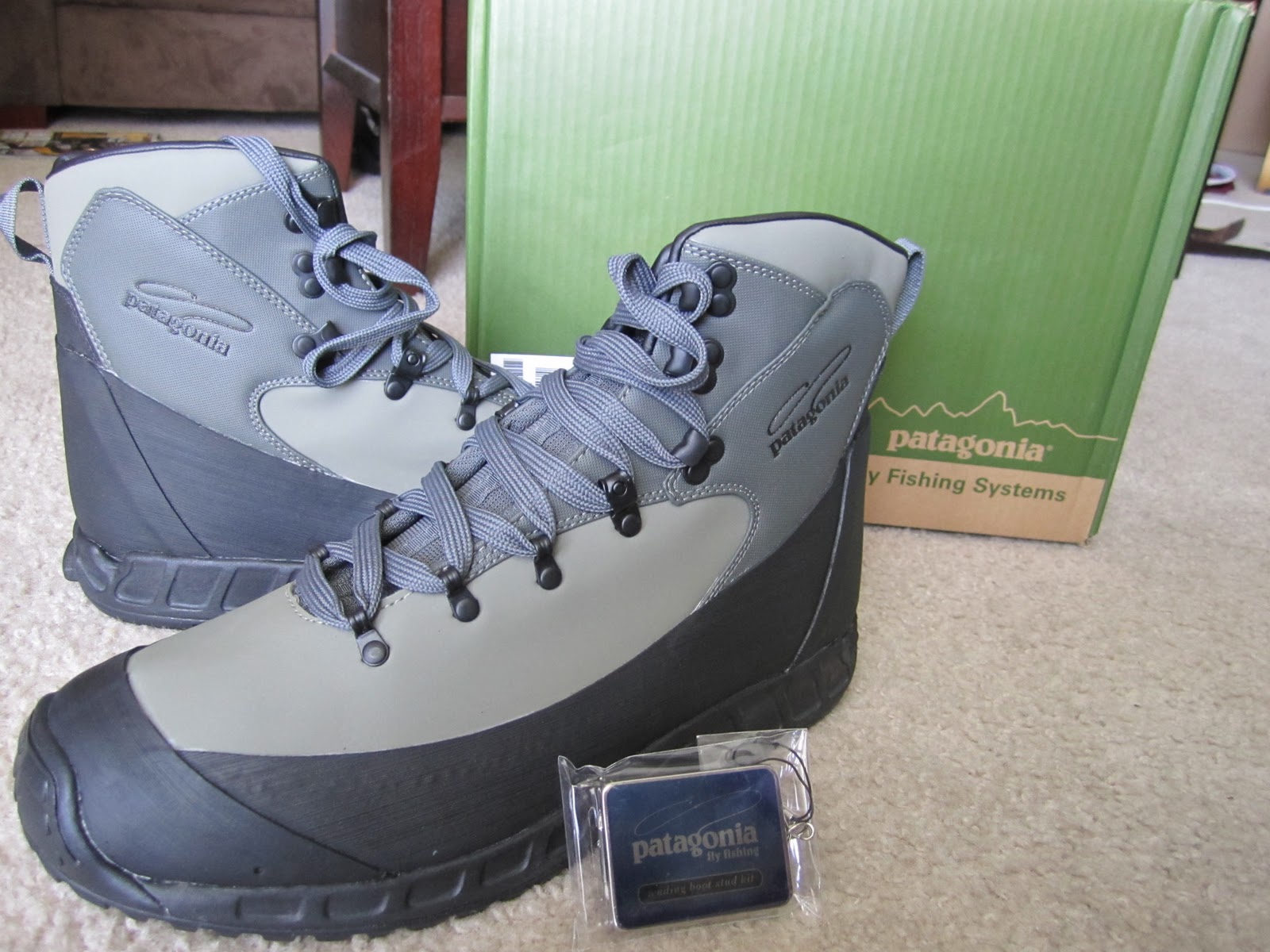
Last christmas (X-Mas '09), I received several generous gifts from my family, including the Patagonia Riverwalker sticky wading boots and a pair of Orvis Pro Guide 3 Waders. The wading boots had received many favorable reviews, including one from Tom at Trout Underground, and the waders were on sale because Orvis was coming out with an updated version of the Pro Guide waders (that should have been a warning sign, but a deal is a deal).
After a year on the water, the soles of the wading boots were no longer sticky and the uppers of the wading boots had been coming apart at the seams. In addition, I had a massive, but still undetectable hole in the right leg of my waders that resulted in half of my lower half wet wading whether it wanted to or not.
I spent a great deal of time on the water last year doing field work and casting a fly rod and I was generally very pleased with the performance of the Riverwalkers. But, I expected more durability out of a pair of wading boots especially at their price point. So, I sent them back to Patagonia, which like many outdoor gear companies, has a very accepting return policy. In exchange, I received the new Rock Grip sticky/studded wading boots for the cost of shipping.
While I liked the shape, feel, and fit of the Riverwalkers, based on the damage that I had done to them, I thought it would be best if I went in a different direction. The Rock Grips appear to be that different direction. They appear to be more heavy duty, with less exposed stitching and a thicker, tougher rubber sole. Take a look at them now. I will review them in a year after giving them hell on the Montana's rivers this season. (NOTE: Forgetful as I am, I forgot to take before and after pictures of my Riverwalkers. Trust me, they were beat up).
Patagonia Rock Grip sticky/studded wading boots
studded vs. un-studded
With the waders, I found that a leak was developing about mid-way through the year in and around the right leg. It didn't bother me much during the summer because I was wet wading. During the fall, it was more of a nuisance. In late fall and early winter, the leak grew and became an issue.
From mid-thigh down to my toes, my long johns and socks were completely saturated with nearly freezing water. The primary issue appeared to be at the seam that connected the neoprene booties to the actual leg of the wader.
So, I contacted Orvis and apparently that has been an issue with this model. I have returned the waders and Orvis indicated that they would be replacing my waders with a new pair, for the cost of shipping. I have yet to receive them, but I am waiting patiently, so I can get back out on the water.
Also, Jergens over at Evolution Anglers, just had some logo stickers printed and sent three over my way. They turned out really well. Check out his blog for some killer content (see the recent winter trips to the Beav (read: Beaverhead) and the Mo (read: the Missouri)) and don't forget to order some EvoAnglers SWAG for a very fair price.
Evolution Anglers Sticker (slapped this one on the Cliff's Bugger Barn)
I have been considering making some YGF stickers this summer and the evolution anglers stickers are a bit of inspiration to get them made. Would youze guyz be interested in some YGF stickers if I had them made?
Finally, in order to have an active followers gadget associated with the YGF blog, I was forced to delete the entire blog, export it, and then recreate it. As a result, some of the comments were deleted. A small price to pay for the new followers gadget. If you like what you see and read, give YGF a follow and if you love it, like YGF on the Facebooks.


 Posts